




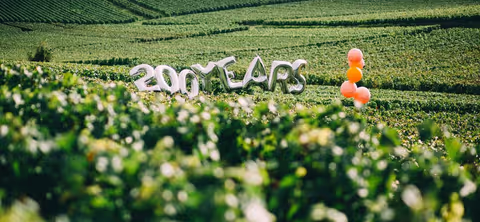
200 years of Madame Clicquot first known blended rosé champagne !
The coppery champagne, the burst of red fruit aromas… Veuve Clicquot Rosé is a vibrant centerpiece of the Veuve Clicquot champagne range.


Did you know that, 200 years ago, Madame Clicquot innovated and completely re-created the rosé champagne of the time?
More than two centuries ago, rosé champagnes were elaborated by coloration with a mixture made from elderberries. But this method of coloration didn’t satisfy Madame Clicquot, a most inspired Cellar Master. She had an audacious new vision in which color, taste, and aroma were vital to the quality. So she broke with accepted norms, and re-created the process of making rosé champagne.
Madame Clicquot was very fond of red-wine grape parcels from the Bouzy region of Champagne, and she elaborated her own red wine from the area. Inspiration struck, and in 1818 she decided to blend this with her still white wines. The result was a stronger rosé champagne, with definite character. Her talent in re-creation gave us the first known blended rosé champagne: Veuve Clicquot Rosé!
Madame Clicquot’s vision for her blended rosé champagne was a wine with character – in taste, aroma, and color. To achieve it, the blend was an essential element, a creative act.
Today, as in 1818, Veuve Clicquot Rosé is a fine example of our House’s blending savoirfaire. Cellar Master Dominique Demarville and his team of experts select excellent quality red wines and still wines from some of the most sought-after vineyards in Champagne, to find the flavors and characteristics that perfectly express the Veuve Clicquot Rosé style.
Made using 50 to 60 different crus, the cuvée is based on Veuve Clicquot Yellow Label traditional blend, 50 to 55% Pinot Noir, 15 to 20% Meunier, 28 to 33% Chardonnay. The blend includes reserve wines (30-45%) originating from several harvests (usually 5 or 6), which ensure the consistency of the House style. These older wines are kept separately to preserve the unique qualities of their vineyard and vintage.
The blend is then completed with 12 to 13% of still red wine using red grapes.
After blending, the wine is then bottled and aged three years in cellars before being released



